Rafael Grossi’s IAEA visit to Barakah was early June 2026; the drone strike was on May 17, 2026; the drone was launched from Iraqi territory; one drone of three penetrated defenses and hit an electric generator outside the inner perimeter; Unit 3 was shut down; emergency diesel generators kicked in; Grossi described it as “carefully targeted” and warned a direct reactor hit could have caused “a very high release of radioactivity.”
Now drafting.
The IAEA’s verdict on the May 17 drone strike against the United Arab Emirates’ Barakah Nuclear Energy Plant moves Gulf risk pricing from generic war premium to specific critical-infrastructure premium.
Director General Rafael Grossi said the plant was “carefully targeted” in the attack, with the intent of triggering a major incident.
That language is doing analytical work. It distinguishes deliberate targeting of nuclear safety systems from collateral damage in a wider war.
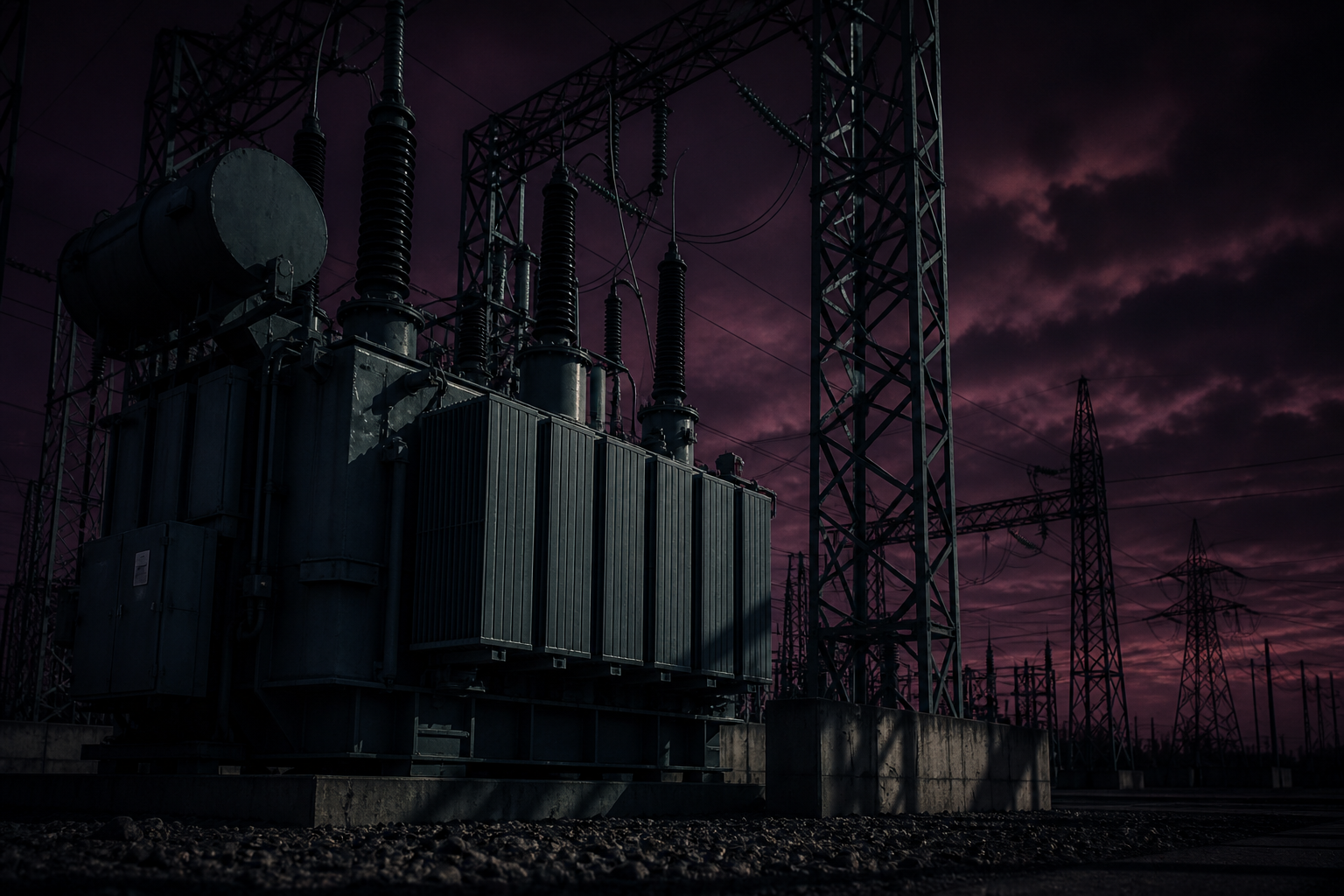
A drone launched from Iraq struck a generator outside the Barakah plant on May 17, causing a fire and temporarily shutting down one reactor; the IAEA director general highlighted the strike’s deliberate aim at electrical structures essential to the plant’s safety functions.
The mechanism matters for capital allocators. Cutting off-site power forces emergency generation to maintain safety functions; reaching meltdown would require complete loss of external power.
In other words, the attacker chose the single off-site vulnerability that, if compounded, degrades containment without needing to breach the inner perimeter.
Three drones targeted Barakah; air defence systems intercepted two, and the third struck an external electrical generator outside the inner security perimeter.
A 66% kinetic interception rate against three inbound drones is not a defensible Gulf benchmark for protecting Category-1 nuclear assets.
Grossi’s framing of the wider risk is calibrated but pointed. He told Euronews the Barakah attack was potentially more dangerous than the situation at Ukraine’s Zaporizhzhia facility because the Emirati reactors were operating at the time.
That comparison is the relevant one. Zaporizhzhia is the only credible peer event — a civilian reactor complex inside an active conflict envelope.
The strategic weight of Barakah for the UAE explains the targeting logic. The four APR-1400 reactors total 5,600 MW of capacity and generate around 40 TWh annually, equivalent to roughly 25% of UAE electricity demand and the country’s largest single source of power.
Barakah supplies industrial offtakers including ADNOC, Emirates Steel and Emirates Global Aluminium.
A successful degradation of Barakah would not merely darken homes. It would hit the hydrocarbons and heavy-industry export base that underwrites the Abu Dhabi sovereign balance sheet.
The Bahrain front confirms this is not an isolated event. The General Command of the Bahrain Defence Force said its air defence systems had intercepted and destroyed three missiles and a number of drones in early June.
Cumulatively, the BDF has reported interception of 194 missiles and 515 drones since the onset of the Iranian aggression.
Bahrain hosts the US Fifth Fleet; the UAE hosts Barakah and the Fujairah hydrocarbon corridor. The targeting pattern reads as a deliberate test of integrated air-defence coverage across two distinct asset classes — military command and civilian critical infrastructure.
The rating-agency response so far has been to hold the line on UAE creditworthiness while flagging tail risk. Fitch affirmed the UAE at AA- with a Stable Outlook, citing low consolidated government debt and strong net external asset position balanced against high geopolitical risk and significant government-related entity leverage.
Moody’s reaffirmed the UAE’s Aa2 rating with a stable outlook in a periodic review completed on 30 March 2026.
S&P affirmed the UAE at AA/A-1+ with a stable outlook on 6 March 2026, citing strong fiscal and external buffers and policy flexibility to manage geopolitical and economic risks.
Those affirmations pre-date Grossi’s “carefully targeted” assessment. The second-order question is whether the agencies treat deliberate targeting of safeguarded nuclear infrastructure as a category shift rather than a continuation of generic war risk.
The base case has already deteriorated meaningfully. Fitch projects UAE real GDP to shrink 4.8% in 2026, with non-oil GDP contracting 3.2% and Dubai’s GDP falling close to 7%; the consolidated budget remains in surplus at 4.5% of GDP despite a near 20% rise in spending.
The IIF’s read on the federation’s shock-absorption capacity is clear. Dubai’s openness makes it vulnerable to shocks in travel, logistics, and confidence, while Abu Dhabi’s balance sheet and energy assets give the federation the capacity to absorb the blow.
Qatar is the comparable on rating-action sensitivity to the same Iran threat vector. Fitch placed Qatar’s AA on Rating Watch Negative due to uncertainty over the Gulf state’s security environment after the Iran war.
If Fitch saw enough security deterioration in Qatar to justify a watch action, a deliberate strike on a safeguarded reactor’s external power supply in the UAE is at least as material — and arguably more so, because it imports a new threat class.
The capital-flow channel is the underappreciated transmission. Moody’s downgraded Bahrain’s outlook to “negative” from “stable” in late April, and these developments likely spurred talks reportedly underway between the US Treasury and some GCC governments about Washington providing emergency dollar liquidity if the Iran war persists and continues to disrupt Strait of Hormuz shipments.
A Treasury swap discussion is not yet a swap line. It signals, however, that the senior partner views Gulf liquidity stress as a non-trivial probability.
The policy response in Abu Dhabi has been to internationalise. The UAE told an extraordinary IAEA Board of Governors meeting that drones launched from Iraqi territory struck the Barakah facility’s electrical generator outside the plant’s inner perimeter.
Naming Iraq as the launch geography — without yet attributing command authority in Political Times’ voice — keeps the diplomatic options open while pressuring Baghdad on territorial control.
The capital implication is granular. UAE 10-year sovereign and ENEC-linked utility paper has held in on agency affirmations dated before the Grossi assessment; the asymmetry favours buyers of protection against a further rating-action sequence over the next two quarters, particularly via Qatar-UAE CDS basis trades, given the Fitch watch action on Doha.
Equity exposure to UAE-listed industrials with direct Barakah offtake — petrochemicals, aluminium, steel — would probably underperform broader ADX in a scenario where a second strike forces a multi-unit shutdown rather than the Unit 3 single-reactor event of May 17.
Korean nuclear EPC names with Gulf order-book exposure face a re-rating risk that is not yet in consensus, given Barakah is the reference plant for the APR-1400 export franchise. Saudi Arabia’s pending civil nuclear procurement — the most credible regional comparable — becomes the marginal pricing event.
Probability-weighted, the most likely outcome is that the IAEA convenes a security-of-installations track, the UAE accelerates layered air-defence procurement around Al Dhafra, and the rating agencies maintain stable outlooks while widening their downside scenarios. The tail that matters for portfolio construction is the one Grossi explicitly named: a direct hit on an operating reactor.