
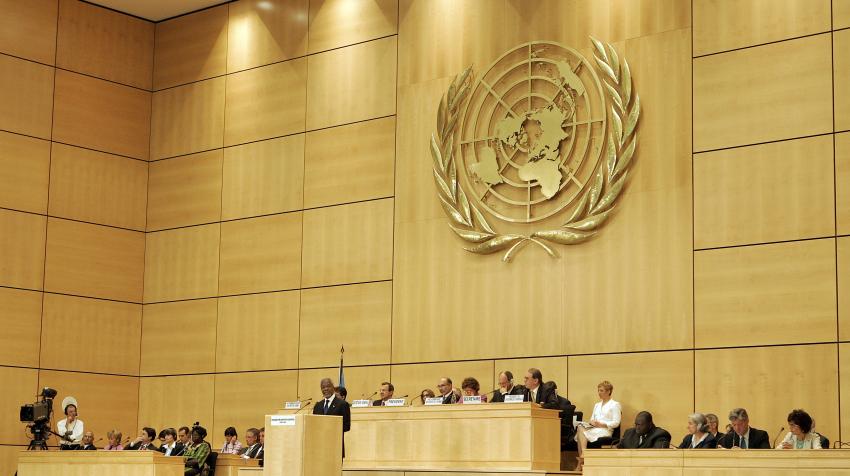
The UN Human Rights Council is convening a special session on El Fasher after a UK-led request backed by more than two dozen states — signalling that Darfur is moving from “humanitarian crisis” back into an international accountability track.
GENEVA / EL FASHER — The UN Human Rights Council will hold a special session on 14 November 2025 on the human rights situation in and around El Fasher, following a formal request submitted on 5 November by the UK with Germany, Ireland, the Netherlands and Norway, and backed by 24 Council members.
The move is procedural — but strategically meaningful. It suggests that Darfur is no longer being treated as a distant humanitarian collapse that the world manages through aid statements. It is being reframed as an atrocity-risk theatre demanding investigation and political consequences.
A diplomatic signal: when a crisis becomes “session-worthy”
Special sessions are rare by design; they are meant for moments when member states decide that routine UN condemnation is insufficient. The UK-led coalition’s ability to secure rapid support indicates a judgment shared across capitals: the violence around El Fasher is not an isolated battlefield episode, but a pattern that could harden into broader impunity unless it is documented and confronted early.
Civil society pressure helped shape this momentum. A Human Rights Watch letter on 3 November urged the Council to convene a session and push for urgent investigations and reporting on alleged crimes in and around El Fasher.
Evidence is becoming part of the battlefield
What changes in November is not only the diplomatic calendar, but the evidentiary environment.
Associated Press reporting, citing satellite imagery analysis by the Yale School of Public Health and AP, described indications of mass burials in El Fasher after the city was seized, including apparent graves and other visual markers consistent with large-scale killings.
The RSF has denied allegations of killings, and the true scale remains difficult to verify due to restricted access and communications breakdown. But the strategic shift is clear: with independent documentation expanding, the conflict is becoming harder to bury under ambiguity.
Why this matters for EMEA beyond Sudan
For Europe and the broader EMEA security environment, Darfur is not insulated. Large-scale displacement pressures border systems and humanitarian corridors, while impunity risks spillover effects—through armed networks, cross-border criminality, and the politics of migration management.
The Council’s move also matters because accountability mechanisms often become policy levers: they shape sanctions debates, donor conditionality, and diplomatic bargaining, even when prosecutions are slow.
The strategic point
The UNHRC special session is not a solution. But it is a change in posture: a step toward inquiry, documentation, and potential attribution—tools that can alter incentives for armed actors and raise the cost of continued abuses for external backers.