The RSF’s entry into North Darfur’s capital ends a long siege and reshapes Sudan’s war map. What follows is a familiar and dangerous pattern: displacement, alleged summary executions, and a collapsing humanitarian presence — with spillover risk across Chad and the wider Sahel corridor.
EL FASHER / TAWILA / GENEVA — After more than 540 days of siege, the Rapid Support Forces (RSF) entered El Fasher, the last major Darfur state capital outside its control. For the RSF, the city’s fall is a strategic victory: it completes effective dominance across Darfur and strips the Sudanese Armed Forces (SAF) of their most symbolically important position in the west. For civilians, it has triggered the worst-case scenario humanitarian agencies had been warning about for months.
The violence around El Fasher did not begin with the takeover. Earlier in October, the UN human rights chief Volker Türk condemned what he described as continuing killings and attacks on civilian sites in the besieged city, citing reports of at least 53 civilians killed and more than 60 injured over several days — and warning that the civilian toll might be higher.
That warning now reads less like a diplomatic statement than a prelude: once a besieged city falls, the “fog of victory” often becomes cover for settling scores, punitive raids, and ethnically charged violence.
A takeover that immediately produced mass flight
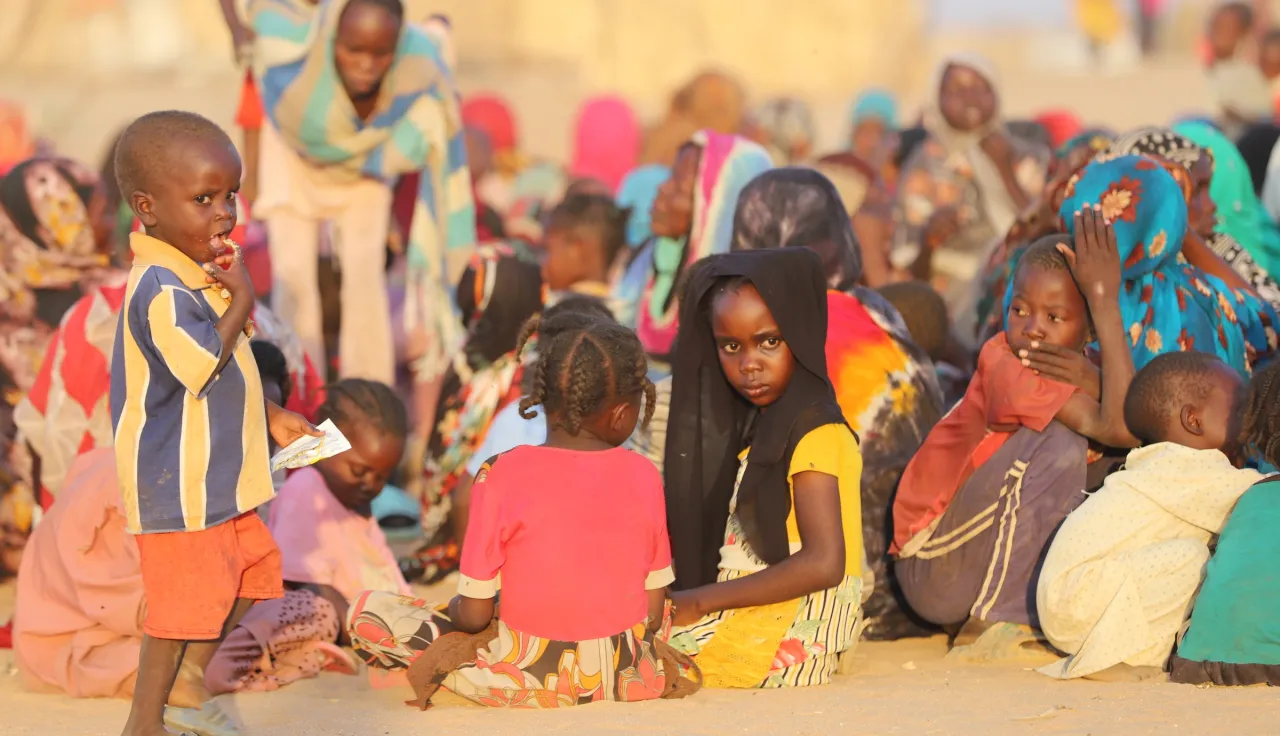
Displacement figures underline how quickly El Fasher moved from siege to rupture. The International Organization for Migration (IOM) reported that more than 26,000 people were displaced in the first days after the RSF took control, with movements largely toward rural areas around El Fasher and towards Tawila, and warnings of insecurity on exit routes.
For a city already ringed by armed checkpoints and deprived of aid flows, flight is not a simple “evacuation”; it is survival under constraint — often without safe corridors, transport, or medical support.
The atrocities allegations: executions, raids, attacks along escape routes
The most serious claims are also the most operationally consequential, because they shape whether any stabilisation is plausible.
A UN statement from the Operational Humanitarian Country Team condemned ongoing attacks against civilians in and around El Fasher and said it was “horrified” by credible reports including summary executions, house-to-house raids, attacks on civilians along escape routes, and sexual violence, while noting that humanitarian access remained severely restricted.
UNFPA’s flash update described the entry into El Fasher as triggering a “catastrophic humanitarian situation”, reporting widespread atrocities, collapse of the last functioning maternity capacity, and extreme risks for women and girls amid the absence of lifesaving services.
These accounts point to a classic escalation dynamic: once control is gained, armed groups prioritise consolidation — controlling roads, detaining suspected opponents, and projecting dominance — in ways that collide directly with civilian protection and humanitarian delivery.
Tawila becomes the pressure valve — and starts to break
The human geography of this crisis is already visible. Tawila, west of El Fasher, has functioned as a refuge point — but the influx is now overwhelming fragile medical capacity.
Médecins Sans Frontières (MSF) reported treating hundreds of injured people arriving from El Fasher in the days after the RSF entry, alongside large numbers of traumatised new arrivals and severe shortages of water, food, shelter and medical support.
This matters strategically because displacement hubs can become secondary crisis zones: overcrowding, disease risk, malnutrition, and insecurity concentrate in places that were never built to absorb city-scale movement.
Why El Fasher’s fall changes the war’s political logic
El Fasher is not only a city; it is a lever.
- Military geography: With El Fasher taken, the RSF can more plausibly pressure corridors toward North Kordofan, threatening the buffers that protect SAF-held central and eastern Sudan — and increasing the risk that the conflict hardens into de facto territorial partition rather than a contest for a single national centre.
- Civilian governance: The collapse of remaining service nodes — hospitals, maternity care, local responders — converts a territorial gain into a governance vacuum. That vacuum is where predatory control structures (ransom, detention, forced displacement) often emerge.
- Regional spillover: Darfur is a borderland. Large-scale displacement pushes directly toward Chad and the Sahel humanitarian ecosystem, while accusations of ethnically motivated abuses risk reigniting the memory and the mechanisms of earlier Darfur atrocities — a reputational and diplomatic shock that could reconfigure external involvement.
The deeper risk: when violence becomes “administrative”
The most alarming detail in UN reporting is not only the scale of violence, but its texture: raids, executions, obstruction of movement, and attacks on escape routes.
Those are not battlefield by-products; they are patterns associated with control.
In practice, once such patterns are established, ceasefire language becomes less relevant than whether external actors can secure three basics: (1) civilian movement, (2) protected medical corridors, and (3) independent verification. Without them, the conflict ceases to be merely a “front line” story and becomes a dispersed atrocity risk across towns and transit routes — precisely the kind of crisis that is hardest to reverse.