A Gaza ceasefire has lowered the temperature in the Bab al-Mandab corridor, prompting a cautious reassessment by carriers and Egypt’s Suez Canal Authority. But insurers and operators remain wary that stability is conditional — and reversals could be rapid.
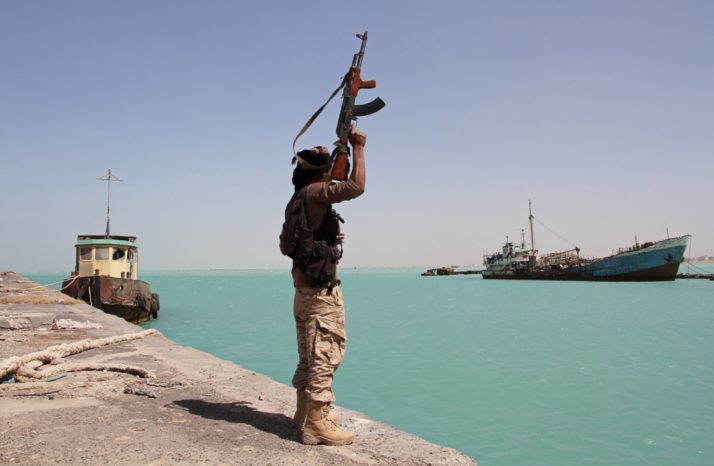
DUBAI / CAIRO / LONDON — Yemen’s Houthis have signalled—through a message circulated to Hamas’ Qassam Brigades—that their attacks on Israel and commercial shipping in the Red Sea have paused while the Gaza ceasefire holds, with an explicit warning that operations would resume if fighting restarts.
That signal matters because it targets a strategic artery: before the crisis, the Red Sea–Suez route carried a meaningful share of global seaborne trade, and the Houthi campaign forced many operators to reroute around the Cape of Good Hope, pushing up time, cost and volatility across Asia–Europe supply chains.
A market that trades in “confidence”, not announcements
Shipping is not diplomacy. Even when political signals improve, carriers re-open routes only when three conditions align:
- Threat level looks sustainably reduced
- War-risk insurance pricing stabilises
- Operational networks (port rotations, schedules, crewing) can be re-optimised without whiplash costs
The Financial Times noted that, despite the pause signal, maritime experts expected the industry to remain cautious about immediately resuming Red Sea routes given the Houthis’ retained capability and stated intent to restart if Gaza violence returns.
Egypt’s Suez barometer: traffic returns, but slowly
Egypt is an early indicator because the Suez Canal directly reflects whether carriers believe the corridor is usable.
On 4 November 2025, Reuters reported that Suez Canal revenues rose 14.2% (July–October 2025, year-on-year) as Red Sea tensions eased after the Gaza ceasefire, with October seeing the highest monthly traffic since the disruption began, and carriers considering trial transits to rebuild confidence.
This is the “confidence trade” in action: even modest improvements in perceived risk can produce measurable shifts in routing—before a full normalization.
Operators shift from “avoidance” to “conditional re-entry”
By late November, the tone among major carriers had moved toward conditional re-entry rather than blanket avoidance.
On 25 November 2025, Reuters quoted Maersk’s CEO saying the company intended to return to the Red Sea route via Suez as soon as conditions allow, pointing to progress in Gaza peace efforts and improved security conditions in the Bab al-Mandab area—while stressing crew safety as the binding constraint.
Even so, a full return is not just a security question—it’s a network decision. The longer carriers operated via the Cape route, the more their schedules, equipment positioning, and customer commitments were built around the “long way around.”
The strategic point
The ceasefire-driven pause signal is significant, but the real story is the repricing of risk across an artery that links Europe, the Gulf, and East Africa. A return to Red Sea routing would ease transit times and remove some supply-chain friction for Europe; a relapse would quickly revive volatility in freight, insurance, and regional revenues (especially Egypt).