US and UK sanctions on Russia’s Lukoil forced Baghdad to freeze payments and crude entitlements at one of Iraq’s biggest fields, turning an external geopolitical tool into an operational shock for OPEC’s second-largest producer.
BAGHDAD / BASRA — The West’s sanctions campaign against Russia spilled directly into Middle East energy plumbing in November, after Lukoil declared force majeure at Iraq’s West Qurna-2 oilfield, citing disruptions caused by US and UK sanctions.
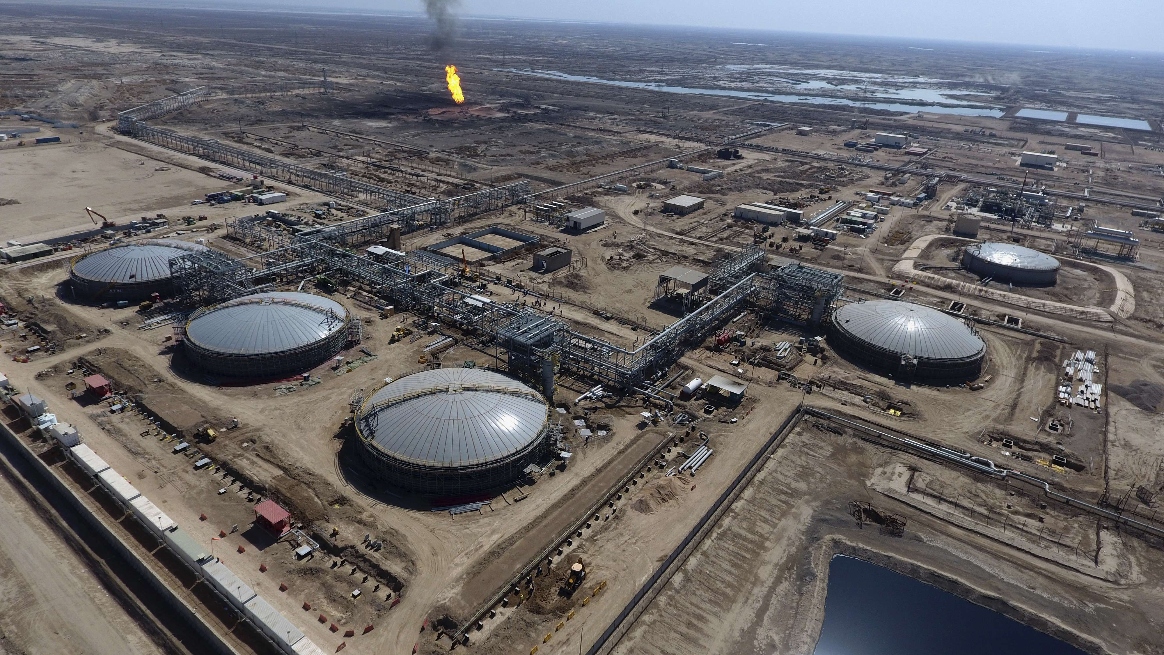
West Qurna-2 is not a marginal asset: it accounts for roughly 9% of Iraq’s oil output, producing around 480,000 barrels per day. That scale turns a legal and financial restriction into something closer to a sovereign operational risk.
A “payments freeze” becomes a production risk
Once Lukoil was sanctioned, Iraqi authorities froze the normal channels used to compensate the operator — both cash payments and in-kind crude liftings — because engaging a sanctioned entity risks secondary penalties and compliance breaches.
Reuters reported that Iraq’s state marketer SOMO cancelled loadings linked to Lukoil’s share, and that the freeze interrupted around 4 million barrels of in-kind payments allocated for November.
For Baghdad, the dilemma is structural: Iraq can’t easily keep a sanctioned operator whole, but it also can’t afford disruption at a field that anchors national revenue.
Force majeure is leverage — and an exit threat
Lukoil’s force majeure notice is not only a legal shield. It is leverage. Reuters reported the company warned Iraq that if the underlying constraints are not resolved within six months, it could cease production and exit the project.
This shifts the bargaining frame from “how to keep operations normal” to “how to prevent a strategic asset from becoming unmanageable under sanctions compliance.”
Baghdad’s preferred solution: time to engineer a sale
By mid-November, Iraqi officials were discussing seeking a six-month waiver from the US Treasury to create space for Lukoil to sell its stake, rather than forcing an abrupt rupture.
That request — even if only exploratory — reveals how Iraqi decision-makers see the problem: not ideological alignment, but transaction management. A waiver buys time to run a controlled transition to a buyer who can operate without sanctions constraints.
The wider pressure point: “energy war” tools don’t stay regional
This episode underlines a broader reality: when sanctions target major energy firms, the effects can ricochet into third countries’ production stability — especially where contracts rely on cost recovery, crude entitlements, international staffing, and cross-border service chains.
For Europe, the relevance is not sympathy or blame; it is exposure. Tightening or loosening supply at a 480kbpd node changes the risk distribution in oil markets — precisely when geopolitics is already feeding volatility.