European powers are no longer speaking abstractly about restoring UN sanctions. In early December, the nuclear file entered a procedural phase — where legal mechanics, not rhetoric, begin to define the escalation ladder.
VIENNA / PARIS / TEHRAN — For most of 2025, the word “snapback” hovered in diplomatic language like a distant threat. In December, it started to acquire form.
European officials — particularly within the so-called EU3 (France, Germany, the UK) — have shifted from signalling displeasure over Iran’s safeguards posture to quietly mapping the procedural steps required to trigger the reimposition of UN sanctions under the JCPOA framework. The difference is subtle but consequential: once legal clocks begin to tick, escalation becomes administrative rather than rhetorical.
From verification gaps to legal positioning
The immediate driver remains the verification dispute.
The IAEA continues to report gaps in its ability to fully account for elements of Iran’s enriched uranium inventory and access arrangements following earlier monitoring disruptions. The problem is not simply enrichment level — though Iran’s stockpile enriched to near-weapons-grade remains politically sensitive — but continuity of knowledge: the Agency’s capacity to track material movement and centrifuge activity without interruption.
For European capitals, that gap transforms the political debate. If verification cannot be restored to an agreed baseline, the question ceases to be whether Iran is crossing a threshold; it becomes whether the international system is prepared to tolerate uncertainty at that scale.
That is where snapback re-enters the room.
What “snapback” actually means
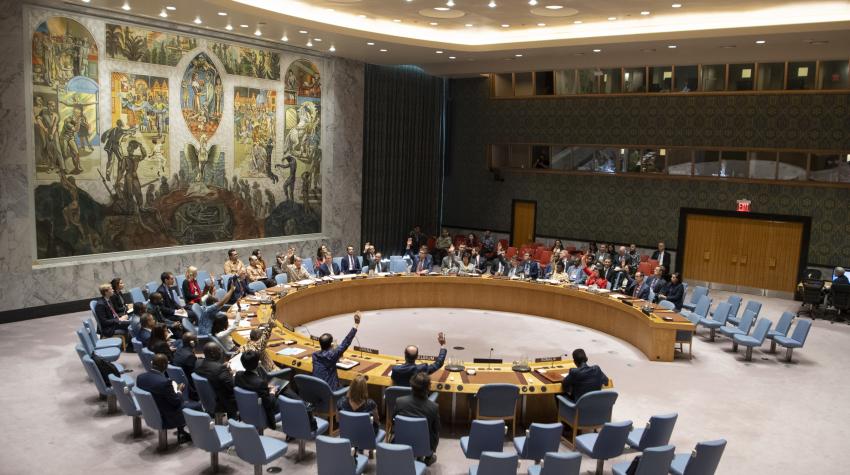
Under UN Security Council Resolution 2231, participants in the original JCPOA framework retain the ability to trigger a mechanism that would restore previous UN sanctions if significant non-performance is alleged.
Technically, once initiated, the process is difficult to block: unless the Security Council votes to continue sanctions relief, the prior measures return automatically after a set period.
That design — automaticity rather than consensus — is why snapback has always been considered a nuclear diplomatic tool. It bypasses veto politics.
In December, discussions in European policy circles appear to be shifting toward procedural readiness: preparing legal justifications, documenting compliance concerns, and aligning political support among partners before any formal trigger.
Tehran’s calculation
Iran’s leadership has long argued that snapback would constitute a breach of the diplomatic balance that followed the JCPOA’s collapse. Officials have warned that such a move could prompt countermeasures — including further reductions in transparency or acceleration of nuclear activity.
The risk dynamic is therefore layered:
- If Europe does nothing, verification gaps widen.
- If Europe initiates snapback, Tehran may escalate enrichment or restrict inspections further.
- If both sides posture without procedure, ambiguity persists — but leverage erodes.
December’s shift is that Europe appears less willing to let ambiguity linger indefinitely.
Regional spillover risk
The snapback debate does not unfold in isolation. It intersects with:
- Ongoing Israel–Iran shadow confrontation dynamics.
- Gulf states’ security calculations.
- European energy and shipping exposure in the Gulf corridor.
- US domestic political timing entering 2026.
If snapback were formally triggered, it would not merely reimpose UN sanctions; it would reshape diplomatic bandwidth across the region — forcing governments to clarify alignment positions.
The structural shift
The most important change in December is not a headline announcement. It is the transition from warning to workflow.
Once lawyers, not only diplomats, begin structuring the path toward snapback, the timeline compresses. Even if the mechanism is never formally triggered, procedural preparation increases its credibility — and credibility alters bargaining power.
The Iran nuclear file has entered that phase.