Western-backed censure at the IAEA Board triggers Tehran’s rollback of a post-strike monitoring framework, raising fresh questions over uranium accounting and the durability of any diplomatic off-ramps.
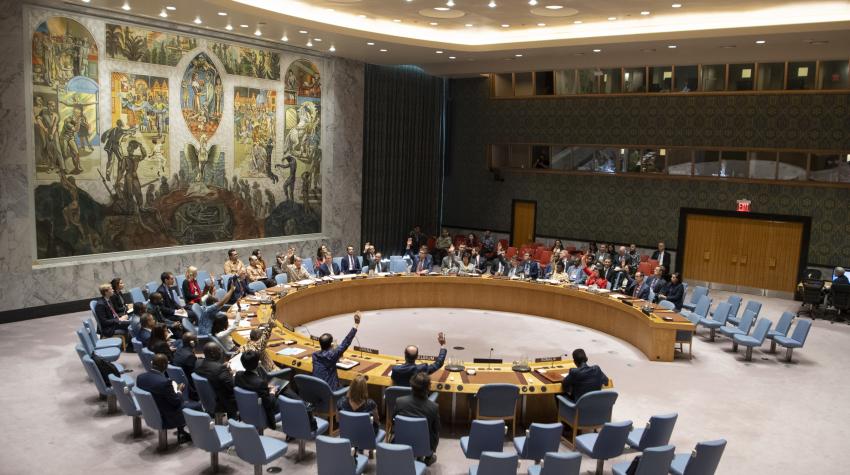
VIENNA / TEHRAN — Iran’s nuclear file returned to the centre of international crisis management in the third week of November, after the International Atomic Energy Agency’s 35-nation Board of Governors adopted a resolution demanding that Tehran provide information “without delay” on its enriched-uranium stockpile and grant full access to facilities — including sites damaged in June strikes.
The vote — 19 in favour, 3 against (Russia, China and Niger), 12 abstentions — is less notable for its arithmetic than for what it attempts to restore: continuous knowledge of nuclear material inventories, the core currency of safeguards credibility.
A safeguards problem framed as “inventory blindness”
At issue is not only Iran’s enrichment level, but the IAEA’s ability to verify what exists, where it is, and whether any material has been diverted.
IAEA Director-General Rafael Grossi, in remarks to the Board, warned that the Agency’s five-month lack of access to inventories of low-enriched and highly-enriched uranium means verification is “long overdue” under standard safeguards practice — and “critical” to re-establish quickly.
Western states made the same point more bluntly in statements circulated around the meeting, arguing that Iran’s safeguards obligations under the NPT remain in force and cannot be suspended, and calling for a “special report” on nuclear material at affected facilities.
Tehran’s response: cooperation becomes conditional again
Iran had warned ahead of the vote that a censure would “adversely affect” cooperation. After the resolution passed, Iran’s leadership moved to constrict the inspection channel established after the June strikes.
Multiple reports indicate Tehran treated the Board’s action as effectively terminating the September “Cairo” understanding — a framework designed to restart inspections and design information verification, at least at facilities unaffected by the strikes — and signalled that access would not proceed on the previous basis.
This is a familiar pattern in the Iran dossier: when pressure rises, transparency becomes leverage. What is different now is the context — the IAEA is dealing not only with contested access, but with physical uncertainty around damaged sites and associated nuclear material.
Why the Board acted now
Diplomats backing the resolution argue the timeline is driven by verification urgency, not politics: the IAEA still lacks the reporting and access needed to account for material associated with struck facilities, while a large share of Iran’s stockpile is enriched to levels that sharpen proliferation concerns.
Reuters reported that the IAEA estimates Iran’s stockpile at about 440.9 kg enriched to 60% purity, a level close to weapons-grade, and that the resolution seeks immediate disclosure and access to resolve long-standing safeguards questions.
The escalation ladder returns — through procedures, not missiles
In a narrow sense, November’s rupture is bureaucratic: a Board resolution, a response letter, a monitoring framework downgraded. In strategic terms, it restores a ladder of escalation that runs through institutions:
- More IAEA reporting and Board action
- Wider diplomatic and economic measures (including renewed sanctions debates)
- Higher regional military risk if actors conclude verification cannot be restored
That ladder matters because it can climb even without a single battlefield incident: once transparency collapses, worst-case assumptions tend to fill the gap.