Leaders at the European Political Community framed support for Ukraine as continental self-defence — but the toughest questions remain about funding, supply chains and escalation management.
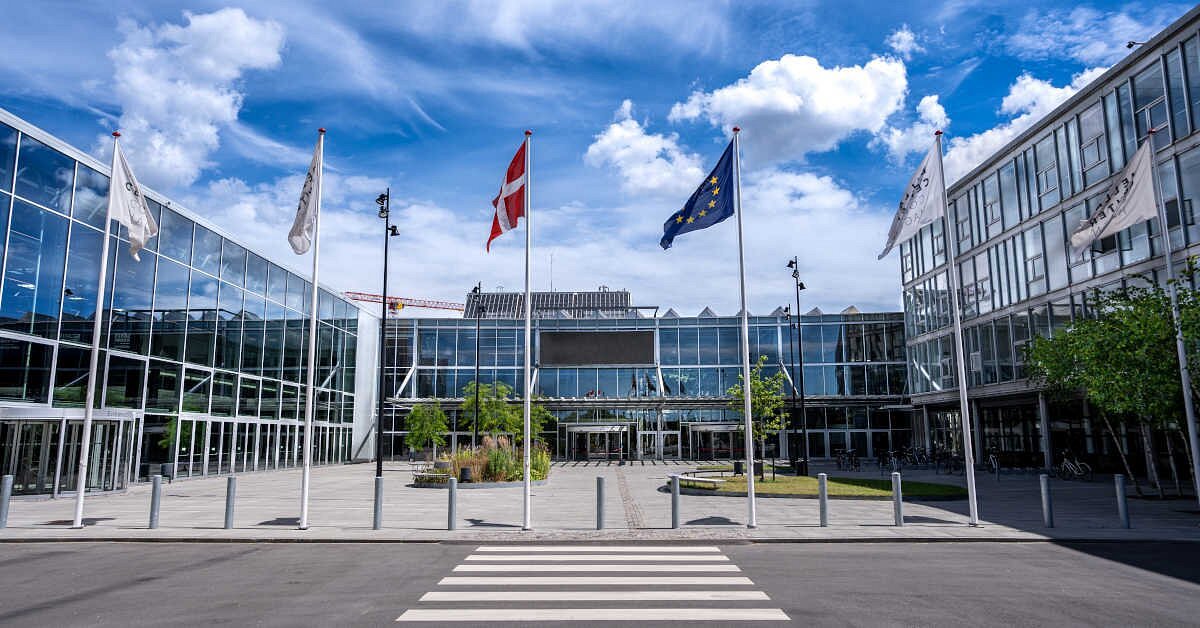
COPENHAGEN — The seventh meeting of the European Political Community (EPC) in Copenhagen was billed as an informal political gathering. In practice, it looked increasingly like the forum where Europe stress-tests a security doctrine that is still under construction: Ukraine is not a “foreign policy file”, hybrid threats are not episodic, and economic resilience is no longer separate from defence.
More than 50 leaders met at the Bella Center with Volodymyr Zelenskyy among the headline speakers, as Denmark’s prime minister Mette Frederiksen urged unity and “rearmament” and described support for Ukraine as “an investment in the defence of Europe”.
The EPC’s official summary points to three pillars for discussion — strengthening Ukraine, the broader security situation, and how to make Europe “stronger and more secure” — followed by roundtables on traditional and hybrid threats, economic security and migration. The list is telling: it treats border protection, supply chains and the war in Ukraine as one strategic continuum rather than separate policy lanes.
That shift was explicit in the opening remarks from António Costa, the president of the European Council, who argued that “security includes economic security” and called for securing value chains and access to critical raw materials. In other words, Europe’s defence problem is being recast as an industrial problem — not only how much to spend, but what can actually be produced, sourced and sustained under pressure.
Hybrid pressure moves from theory to lived experience
The Copenhagen summit landed amid heightened anxiety about “hybrid” pressure — drones, sabotage and cyber operations that stay below the threshold of formal armed conflict while imposing real costs and uncertainty.
In the days around the meetings, Denmark tightened security after a string of drone incidents that disrupted airports and raised concern about surveillance of sensitive sites. The Danish Defence Intelligence Service publicly warned of a high risk of sabotage against Denmark’s armed forces, describing drone incursions and disruption as part of a broader hybrid attack environment.
Frederiksen’s message to partners has been consistent: Europe should stop treating such incidents as local anomalies. AP reported her warning that Russia was waging a hybrid war on Europe, paired with calls to accelerate innovation — particularly in drone defence — and to prepare for a more dangerous decade.
For a political platform like the EPC — deliberately informal and deliberately broader than the EU — the attraction is obvious. It lets leaders from EU and non-EU states share threat perceptions and align political intent without pretending that a new institution can substitute for NATO, the EU or national command structures.
Costa underlined that informality is a feature rather than a bug: the EPC, he said, should remain an informal platform — but one capable of spawning coalitions that turn political intent into action.
Ukraine support becomes Europe’s deterrence strategy
If the EPC has a single organising principle, it is the war in Ukraine. But the tone in Copenhagen suggested something more mature — and more demanding — than the early-war posture of solidarity.
Costa framed the “F-16 coalition” as an example of EPC-style coordination: a grouping that mobilised commitments to support Ukraine’s air defence capabilities. The implication is that European security is now being built through overlapping coalitions: air defence here, cyber cooperation there, targeted support for vulnerable partners such as Moldova elsewhere.
There is a hard logic to this approach. In a landscape where the threat is diffuse — from kinetic warfare to sabotage to coercive trade measures — the response is rarely a single grand bargain. It is a series of mechanisms, each designed to narrow one vulnerability.
But that logic also exposes the central weakness of Europe’s current security posture: it remains far easier to agree on intent than on the instruments that make intent credible.
The fault-line is financing — and the legal risk of boldness
The most contentious instrument in early October was money.
EU leaders were weighing proposals to support Ukraine through very large loans connected to frozen Russian sovereign assets — an idea framed by proponents as a way to ensure Russia, not European taxpayers, ultimately pays. But the legal and political obstacles are formidable: confiscation of sovereign assets is widely seen as prohibited under international law, and even structures designed as “loans” can leave governments exposed to litigation risk, retaliation risk and internal disputes over who bears the downside.
Reuters reported that proposals under discussion included a loan on the order of €140bn, structured so that Ukraine would repay only after receiving reparations from Russia — a logic that attempts to preserve the formal distinction between using assets and taking ownership of them, while still trying to unlock meaningful scale.
The political problem is that Europe is trying to fund deterrence at scale while keeping the risk neatly off national balance sheets. That is rarely possible. Someone has to carry the tail risk — the legal uncertainty, the potential financial compensation if assets must be returned, the threat of counter-measures.
This is not a technical quibble. It goes to the heart of how Europe projects power: whether it can collectively socialise risk in pursuit of strategic goals, or whether it will repeatedly default to the safest, slowest option.
Economic security is now part of the war’s “home front”
The most consequential — and least headline-friendly — part of Copenhagen’s agenda may be Costa’s economic-security framing.
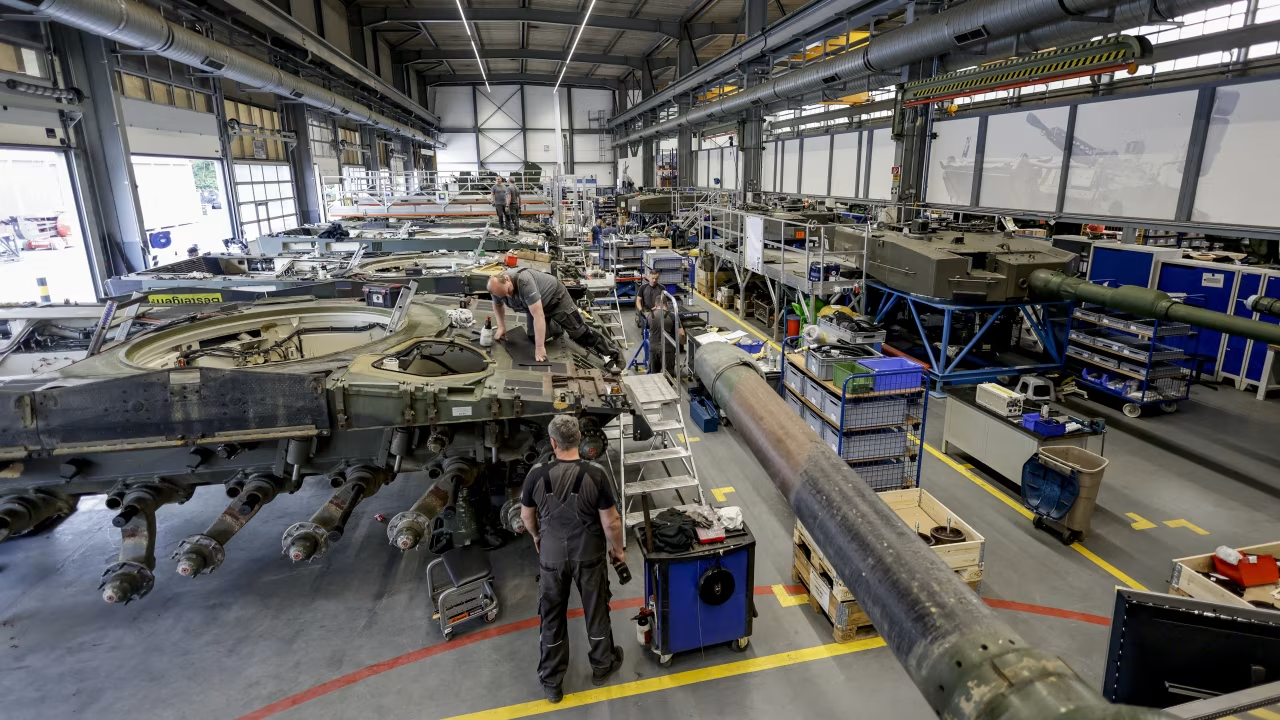
Securing critical raw materials, protecting value chains, and insulating key industries from coercion are often discussed as industrial or trade policy. In the security frame presented at the EPC, they become deterrence infrastructure: without assured inputs and manufacturing capacity, defence plans are not plans but aspirations.
This matters for two reasons.
First, Europe’s defence appetite is rising at a moment when defence industrial capacity remains uneven, procurement remains fragmented, and certain supply chains remain exposed to disruption. Second, the same vulnerabilities that apply to defence apply to energy networks, logistics hubs and the digital backbone. Hybrid threats exploit that overlap by design.
Copenhagen’s roundtables — traditional and hybrid threats; economic security; migration — are therefore best read as three faces of the same test: can European states maintain control over borders, supply chains and political cohesion under sustained pressure?
What Copenhagen actually achieved
The EPC summit did not deliver a treaty, a spending commitment or a new command structure. That is not its purpose.
Its value is political: it makes explicit that Europe is operating in a world where the boundaries between war and peace, economy and security, domestic politics and foreign policy are thinner than before. Denmark’s hosting message — that Ukraine support is “defence of Europe” — is not a slogan so much as a claim about how the next decade will be judged.
The question now is implementation.
If the threat environment is indeed hybrid and continuous, Europe will need more than summit communiqués: it will need clear operational rules for responding to incursions and sabotage, procurement that can deliver at speed, and financing tools that can withstand legal and political stress.
Copenhagen suggested leaders are converging on the diagnosis. The harder part — the instruments — is where Europe’s unity will be tested next.